
Buying guide

Best Mattress for Heavy People (230 lb+)

Above roughly 230 pounds, most mainstream mattresses behave differently than reviews describe: foams compress further, beds feel softer than rated, and comfort layers wear out years early. Heavier sleepers need thicker coils, denser foams, and a firmer starting point.

How we ranked: We ranked for deep support, durability of materials, edge support, and weight ratings. Confirm the weight capacity on every listing - it's a [VERIFY] field until checked against the brand's spec sheet.

#1 · Best For Heavy Sleepers
★★★★☆ 4.4

Purpose-built for heavier sleepers: reinforced TitanCaliber coils, a genuinely firm surface, and durability the average hybrid can't match. Its luxe sibling dethroned the Helix Plus as a top heavy-person pick in expert testing. Best for back and stomach sleepers and higher body weights who need real lift and no bottoming-out; too firm for lightweight or strict side sleepers. Strong value, with a cooling-cover upgrade for hot sleepers. 120-night trial.

Type: Hybrid
Queen Price: $1,332
Trial: 120 nights
Warranty: 10 years limited
Back SleeperStomach Sleeper Heavy Body
Titan by Brooklyn Bedding Titan Plus mattress
#2 · Best Luxury Innerspring
★★★★☆ 4.3

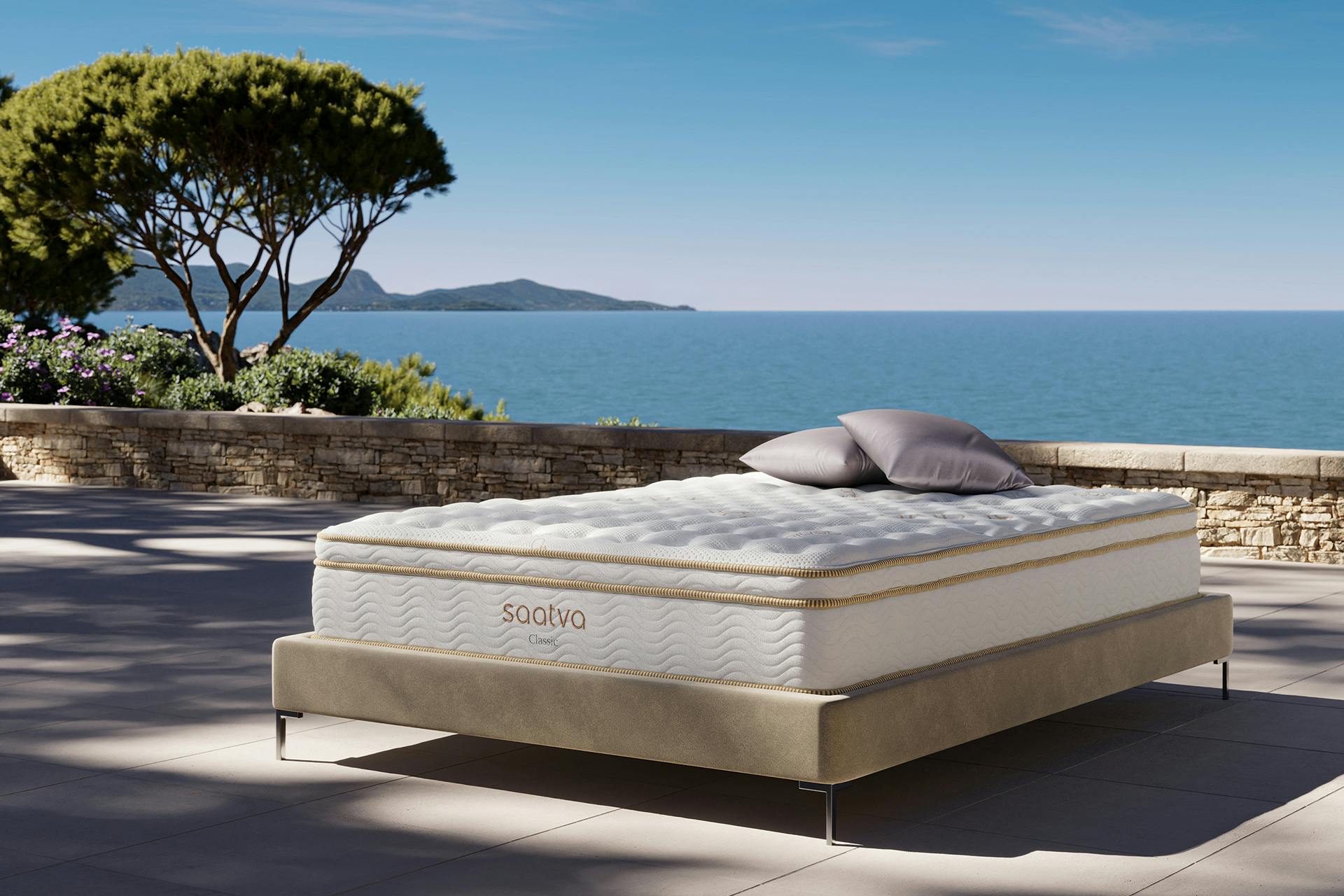
The luxury-hotel innerspring that punches well above its price. Coil-on-coil construction with real chiropractor-approved lumbar engineering, an organic cotton Euro top, and best-in-class edge support, delivered free white-glove with old-mattress removal. Comes in three firmnesses (Plush Soft 3, Luxury Firm ~6, Firm 7.5) and two heights. A 365-night trial and lifetime warranty lead the category. Bouncy and responsive rather than hugging; excellent for back sleepers and couples, weaker on motion isolation.

Type: Innerspring
Queen Price: $1,904
Trial: 365 nights ($99 return processing fee)
Warranty: Lifetime (non-prorated)
Back SleeperStomach SleeperSide Sleeper Average BodyHeavy Body
Saatva Classic mattress
#3 · Best Pillow-top Hybrid
★★★★☆ 4.2

A hotel-style pillow-top hybrid with serious edge support and a breathable Tencel top, in four firmnesses including a Plus build for heavier bodies. A repeated Forbes best-mattress contender: cushioned cloud-like top with real underlying support, strong cooling, and lifetime coverage. Best for back and side sleepers and couples who want luxury feel without Saatva-level pricing. Motion isolation is its weaker area.

Type: Hybrid
Queen Price: $1,799
Trial: 120 nights
Warranty: Lifetime limited
Back SleeperSide SleeperStomach Sleeper Average BodyHeavy Body
WinkBeds WinkBed mattress
#4 · Best Organic / Latex
★★★★☆ 4.1

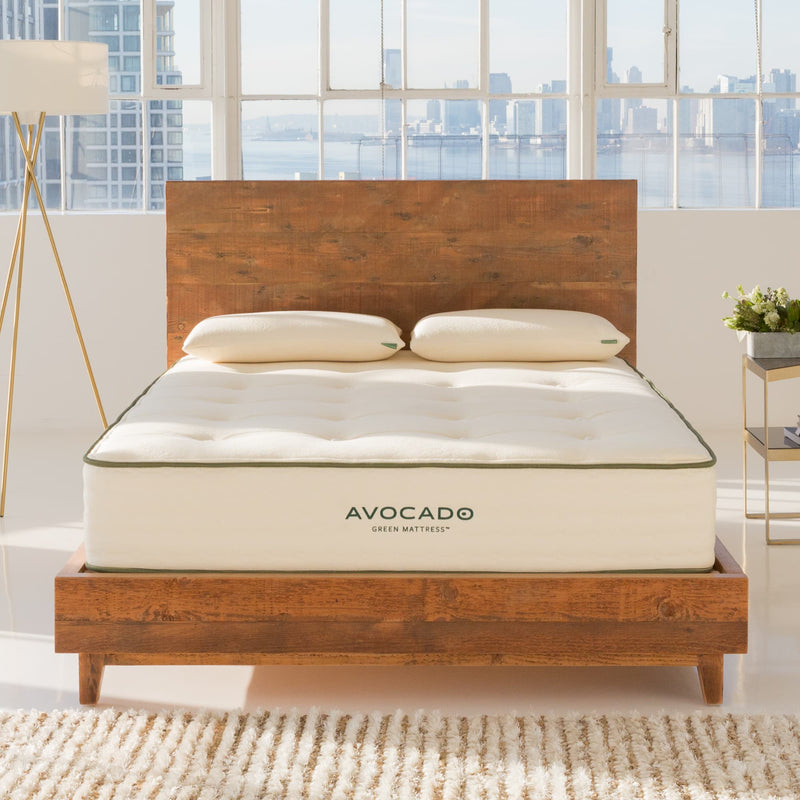
The certified-organic pick: buoyant GOLS organic latex over pocketed coils, wrapped in organic wool and cotton. Naturally cool, responsive with real bounce, and built to outlast nearly everything else here (25-year warranty). Standard build is firm (testers rate ~6.5-7); softer options cost extra. Best for back and stomach sleepers and eco-conscious buyers who want durable natural materials. Firmer feel means strict side sleepers may want the medium or pillow-top upgrade.

Type: Latex
Queen Price: $1,799
Trial: 100 nights (30-night break-in)
Warranty: 25 years limited
Back SleeperStomach Sleeper Average BodyHeavy Body
Avocado Green mattress
#5 · Best Value Luxury Hybrid
★★★★☆ 4.2

Nectar's sister brand and the value luxury-hybrid pick. DreamCloud labels it Firm but testers land it at medium-firm (6-7): a bouncy, easy-to-move-on coil feel with a quilted cooling top, strong edge support, and low motion transfer. Queen frequently drops to around $649 on sale. Backed by a 365-night trial and a lifetime warranty.

Type: Hybrid
Queen Price: $649
Trial: 365 nights
Warranty: Lifetime (Forever warranty; full replacement yrs 1-10, repair/recover after)
Back SleeperSide SleeperCombo Sleeper Average BodyHeavy Body
DreamCloud Classic Hybrid mattress
#6 · Best All-around Value Hybrid
★★★★☆ 4.3

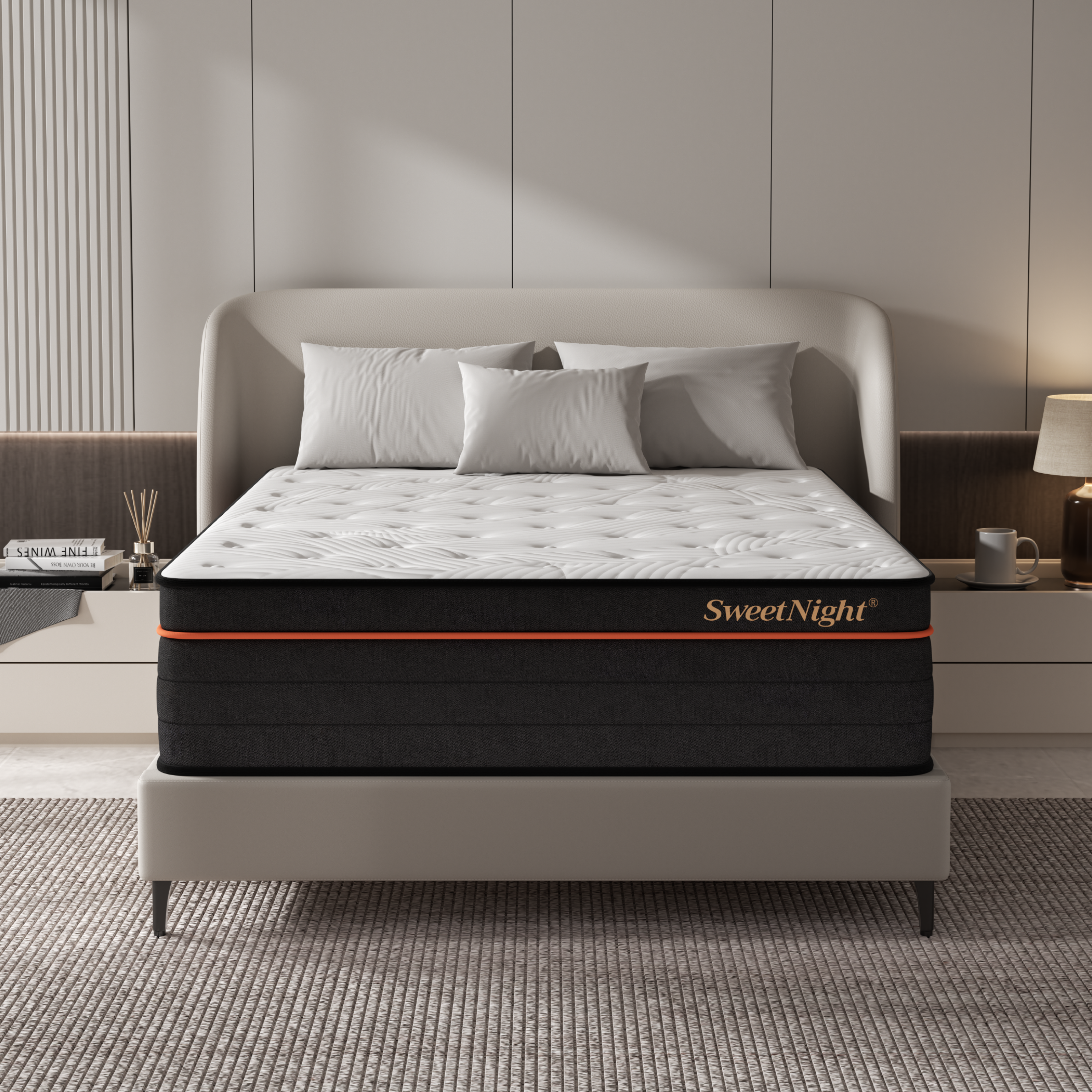
SweetNight's all-around hybrid and their most accessible price, around $320 for a 12" queen on sale (from $499.99). Pairs gel-infused memory foam with individually-wrapped pocket coils for a firmer 7/10 feel with standout edge support and broad bed-base compatibility. Best for back and stomach sleepers who want solid coil support on a budget; its firmness makes it less ideal for side sleepers wanting deep pressure relief. Also sold via Amazon and Walmart.

Type: Hybrid
Queen Price: $319.99
Trial: 100 nights
Warranty: 10 years limited
Back SleeperStomach Sleeper Average BodyHeavy Body
SweetNight Island Hybrid mattress
#7 · Best Budget Firm Hybrid
★★★★☆ 4.0

SweetNight's best-selling pillow-top hybrid, around $360 for a 12" queen on sale (from $549.99). A bouncy, responsive, firmer feel around 6/10: gel memory foam over tempered steel coils, so you rest on top rather than sinking in. Named Best Hybrid by Everyday Health 2026 and HSA/FSA eligible. Best for back and stomach sleepers and value shoppers who want bounce; too firm for most side sleepers. Comes in 10"/12"/14" profiles.

Type: Hybrid
Queen Price: $359.99
Trial: 100 nights
Warranty: 10 years limited
Back SleeperStomach Sleeper Average BodyHeavy Body
SweetNight Twilight Hybrid mattress

Why heavier sleepers need a different mattress

In the mattress industry, “heavy” or plus-size generally means anyone over about 230 pounds - and above that threshold, most mainstream mattresses simply don’t behave the way their reviews describe. There’s a physical reason. A mattress’s firmness rating is measured with a standardized probe applying moderate force. When a 280-pound person lies down, they apply far more force per square inch than that probe, so the mattress compresses deeper and feels softer than its label. A bed rated “medium-firm 6” can feel like a 4 or 5 to a heavier sleeper.

That single fact explains why generic best-mattress lists fail heavier shoppers, and it drives everything in this guide: heavier sleepers sink further, bottom out on thin beds, wear out comfort layers years faster, and need materials built to resist all of that. The good news is the specifications that fix these problems are concrete and easy to check.

The firmness shift: add a point or two

Because your weight compresses a mattress further, you need to start firmer than standard advice suggests to end up at the same effective feel. The practical rule sleep labs use:

  • If a standard-weight side sleeper would pick medium (5.5-6), a heavier side sleeper usually needs medium-firm (6.5-7) to get the same supported feel.
  • Heavier back and stomach sleepers generally do best in the firm range (7-8), which keeps the hips lifted and the spine neutral instead of letting the midsection sag.
  • Between 230 and 270 lb, evaluate the “firm” version of whatever you’d normally consider; above 270 lb, look at 7.5-8 out of 10.

The goal is to stay lifted on the mattress rather than sinking into it. Too soft and your hips drop out of alignment, which is the fast track to lower-back pain.

Why hybrids beat all-foam for heavier bodies

If you take one recommendation from this guide, make it this: choose a hybrid with a real coil core, not an all-foam bed. Coils outperform foam for heavier sleepers on three of the four things that matter - support depth, edge support, and temperature - and, critically, they don’t degrade the way foam does under sustained heavy load.

What to look for in the construction:

  • Coil gauge of 12-14. Gauge measures wire thickness, and a lower number means thicker, stronger wire. A 12-13 gauge coil core is the sweet spot for heavier sleepers - and because gauge is a physical property, it doesn’t soften under your weight the way a firmness rating does. Look for a coil count around 1,000+ in a queen.
  • High-density support foam. The base layers should be dense polyfoam (ideally 2.0 PCF or higher). Low-density foam compresses and wears out fastest under weight.
  • At least 12 inches of total height. Thinner beds don’t have enough material to buffer your weight before you bottom out onto the hard base.
  • Reinforced edge support. Heavier sleepers compress edges more, so a foam-encased perimeter or reinforced edge coils matter a lot - both for sitting on the edge to get up and for using the full surface.

Latex is the other durable option - it’s the longest-lasting comfort material regardless of weight - but coil hybrids give you the best all-around value for the money.

Durability, weight capacity, and the frame underneath

Durability matters more for heavier sleepers than for anyone else, because you’re putting more stress on every layer. A budget bed that lasts a 160-pound sleeper 5-6 years might show real body impressions under a 260-pound sleeper in 2-3. That’s why the cheapest mattress is often the most expensive per year of actual use - a quality hybrid frequently works out cheaper over its lifespan than a bargain bed you replace twice as often.

Two things people forget to check:

  • Stated weight capacity. Many mattresses list a limit - sometimes per sleeper (e.g. 250 lb each), sometimes combined. Beds built for plus-size sleepers, like the Titan Plus, are often rated to 1,000 lb total. Exceeding a stated limit can also void the warranty, so confirm it against the brand’s spec sheet, factoring in your partner’s weight too.
  • The foundation. Your bed frame has a weight limit as well, and a flexing or under-built frame will undermine even the best mattress. A sturdy, well-supported platform or foundation with a strong center support is the baseline - the mattress can only be as stable as what’s under it.

FAQ

What firmness should heavier sleepers choose?

Add one to two points to standard advice. If a side sleeper normally wants a 5.5-6, a heavier side sleeper usually needs a 6.5-7 to get the same effective feel.

Do heavy-duty mattresses exist?

Yes - beds like the Titan Plus are engineered specifically for higher body weights, with reinforced coils and denser foams that resist early sagging.