

DreamCloud Premier Hybrid vs Saatva Classic
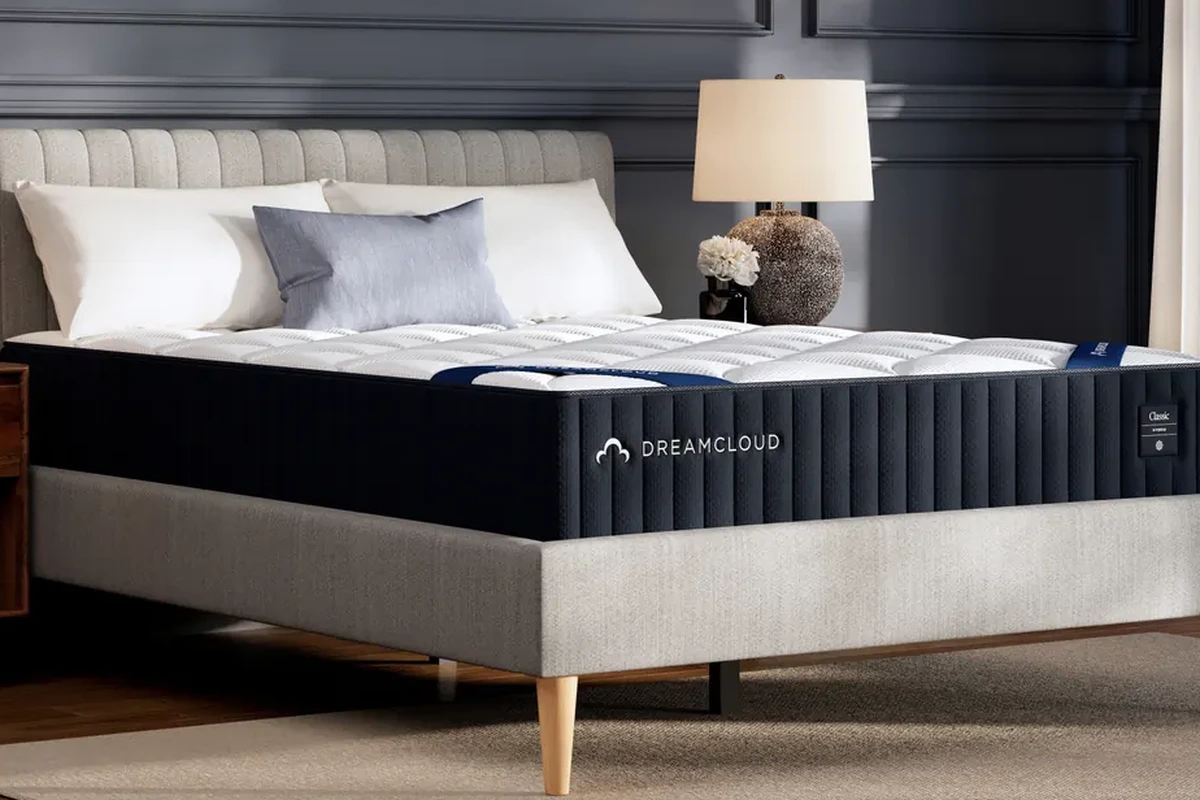
DreamCloud Premier Hybrid
84.0/100
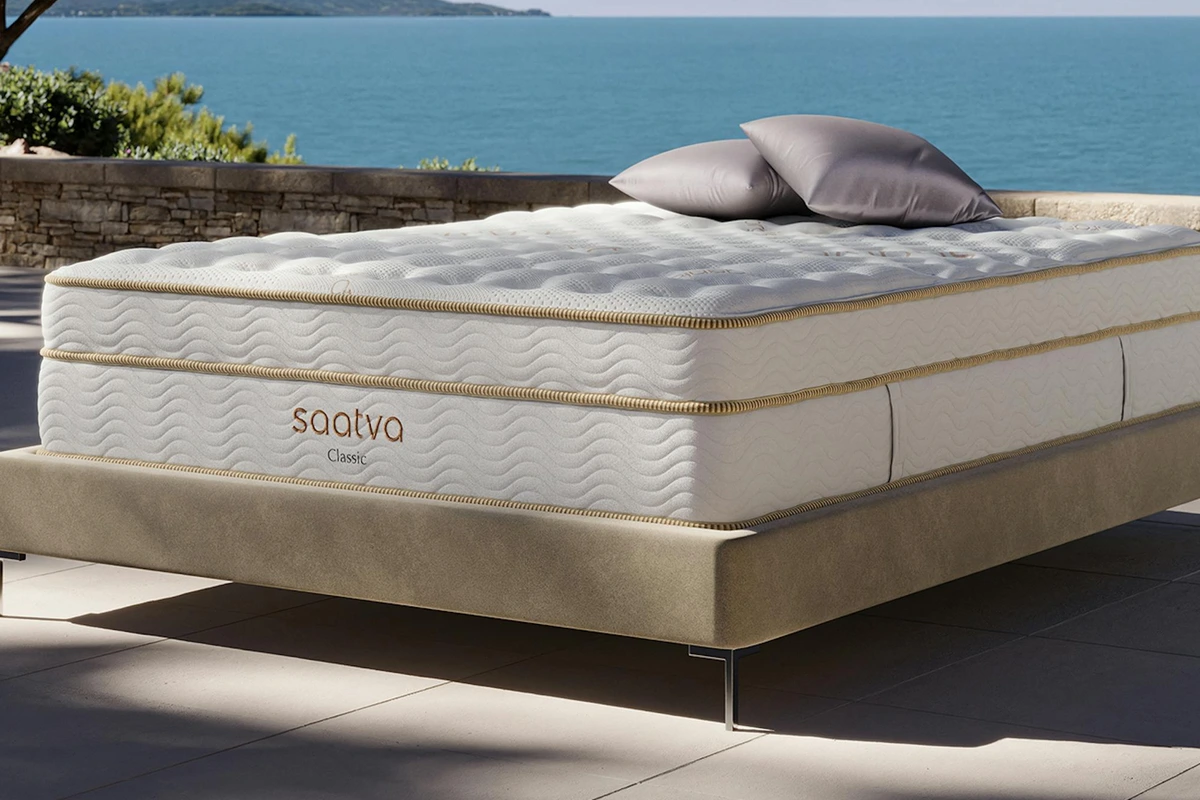
Saatva Classic
85.2/100
Wins on pointsWho wins what
| Use case | Pick | Why |
|---|---|---|
| Best value | DreamCloud Premier Hybrid | 88 against 80. Quality returned per dollar, not lowest price. |
| Best for couples | DreamCloud Premier Hybrid | 78 against 66. Whether a partner's movement reaches your side. |
| Best support and feel | Saatva Classic | 94 against 88. Spinal alignment once the hips and shoulders settle. |
| Best for hot sleepers | Saatva Classic | 92 against 82. How warm the surface gets and how fast it recovers. |
| Best trial and service | Level | DreamCloud Premier Hybrid: free returns against $99. Saatva Classic: white-glove delivery. They cancel out. |
How the five categories compare
| Category | DreamCloud Premier Hybrid | Saatva Classic | Gap |
|---|---|---|---|
| Support | 88 | 94 | 6 |
| Cooling | 82 | 92 | 10 |
| Motion isolation widest gap | 78 | 66 | 12 |
| Edge support | 84 | 94 | 10 |
| Value | 88 | 80 | 8 |
How the scoring works. All five categories count equally, at ×3 each, and the winner is whichever bed has the higher weighted total. The category marked widest gap is where these two differ most, at 12 points - it is the clearest explanation of the result, not the thing that produced it. Scores run 0 to 100 and come from our review scorecards.
Category by category, in detail
Cooling — Saatva Classic
Saatva Classic takes cooling at 92 against 82, a modest gap of 10 points. Cooling governs how much body heat the bed traps overnight, which puts this column in front of hot sleepers, couples sharing body heat, and anyone sleeping under a heavy duvet.
That comes straight off the build. Saatva Classic uses an organic cotton Euro pillow top, breathable antimicrobial-treated organic cotton over a Euro-style pillow top, with zoned quilting that firms up the lumbar area.
Support — Saatva Classic
Here Saatva Classic leads 94 to 88, modest at 6 points. Because support governs whether the spine stays in line once your hips and shoulders sink in, the gap lands hardest on back sleepers, heavier sleepers, and anyone whose lower back complains.
You can see why in the layers. Saatva Classic uses tempered steel support coils, 416 triple-tempered steel coils with a patented Lumbar Zone spinal wire running through the centre, backed by pocketed micro-coil layer and organic cotton Euro pillow top.
Motion isolation — DreamCloud Premier Hybrid, the widest gap between them
Motion isolation goes to DreamCloud Premier Hybrid, 78 against 66 - a clear 12-point gap. What it decides is whether someone else getting up wakes you, and the people it decides it for are couples on different schedules, light sleepers, and anyone sharing with a restless partner or a pet.
That follows from what is inside. DreamCloud Premier Hybrid uses a pocketed coil support core, individually wrapped coils that move independently, with reinforced coils around the perimeter for edge support, backed by memory foam comfort layer.
In practice, a 12-point gap here is the strongest single argument for DreamCloud Premier Hybrid on this page, and it arrives with the lower price attached, not a premium.
Edge support — Saatva Classic
Edge support goes to Saatva Classic, 94 against 84 - a modest 10-point gap. What it decides is how much of the mattress you can actually use, and the people it decides it for are anyone sharing a queen, sitting on the side to dress, or carrying more weight.
That is a construction difference. Saatva Classic uses a foam-encased perimeter, high-density foam rails wrapping the edges, backed by pocketed micro-coil layer.
Value — DreamCloud Premier Hybrid
Value goes to DreamCloud Premier Hybrid, 88 against 80 - a modest 8-point gap. What it decides is whether the money is going into the mattress or the name, and the people it decides it for are anyone deciding on budget rather than on one feature.
That tracks the price directly: $649 for a queen DreamCloud Premier Hybrid against $1,904 for Saatva Classic, almost exactly 3 times the price. Value scores what you get back per dollar, not how good the bed is outright, so a cheaper bed can win this column and still lose the matchup.
Construction and materials
DreamCloud Premier Hybrid is a six-layer pocketed-coil hybrid at 12.5 inches tall, built from 5 layers. Saatva Classic is a true coil-on-coil innerspring at 11.5 or 14.5 inches, built from 5.
That is the root difference between them, and most of the scorecard follows from it. A hybrid and an innerspring do not fail in the same places: with DreamCloud Premier Hybrid, foam sits on top of a coil core, so it splits the difference - contour at the surface, airflow and edge strength underneath. With Saatva Classic, coils carry the load and there is very little foam, so it breathes and holds its edges but passes more movement across.
On the coil unit, DreamCloud Premier Hybrid uses roughly 8 inches of individually wrapped coils with reinforced coils around the perimeter, while Saatva Classic uses two separate coil units, 884 pocketed comfort coils over 416 tempered steel support coils in a queen.
Comfort layer depth is the other number worth knowing: 1 inches on DreamCloud Premier Hybrid against 3 on Saatva Classic. More comfort material generally means more pressure relief at the shoulder and hip, which is why Saatva Classic is the easier bed for a side sleeper to settle into and DreamCloud Premier Hybrid is the one that holds you nearer the surface.
Both carry CertiPUR-US.
DreamCloud Premier Hybrid is stated fiberglass-free. Saatva Classic does not publish that either way.
Saatva Classic is USA, handcrafted to order. DreamCloud Premier Hybrid does not publish where it is made.
DreamCloud Premier Hybrid
It has five layers and is a six-layer pocketed-coil hybrid at 12.5 inches. The comfort section is a CloudQuilt cover and a memory foam comfort layer. The support underneath is roughly 8 inches of individually wrapped coils with reinforced coils around the perimeter.
Saatva Classic
It has five layers and is a true coil-on-coil innerspring at 11.5 or 14.5 inches. The comfort section is an organic cotton Euro pillow top, a memory foam lumbar crown and a pocketed micro-coil layer. The support underneath is two separate coil units, 884 pocketed comfort coils over 416 tempered steel support coils in a queen. The edge is handled by a foam-encased perimeter, high-density foam rails wrapping the edges.
Bands show the order of the layers. They are not drawn to scale, because not every layer thickness is published.
Specifications
| DreamCloud Premier Hybrid | Saatva Classic | |
|---|---|---|
| Queen price | $649 | $1,904 |
| Type | Hybrid | Innerspring |
| Height | 12.5″ | 11.5 or 14.5″ |
| Firmness | 6/10 | 6/10 |
| Firmness options | 1 | 3 |
| Twin price | $449 | $1,099 |
| King price | $849 | $2,379 |
| Fiberglass-free | Yes | Not published |
| Weight capacity | Confirm per size | Confirm; HD model for 230 lb+ per side |
| Certifications | CertiPUR-US | CertiPUR-US |
| Trial | 365 nights | 365 nights ($99 return processing fee) |
| Warranty | Lifetime (Forever warranty; full replacement yrs 1-10, repair/recover after) | Lifetime (non-prorated) |
Firmness and feel, by sleeper
DreamCloud Premier Hybrid is published at 6.0 out of 10 and Saatva Classic at 6.0. That is 0.0 of a point apart, which is less than the difference body weight alone makes, so neither will feel categorically softer to everyone.
That single number undersells Saatva Classic, which ships in three firmnesses: Plush Soft at about 3.5, Luxury Firm at about 6 and Firm at about 8. Choosing the right one matters more than choosing between these two beds, because the wrong Saatva Classic will feel worse than the right DreamCloud Premier Hybrid.
The Plush Soft at about 3.5 out of 10 is the one for strict lightweight side sleepers under about 150 lb.
The Luxury Firm at about 6 out of 10 is the one for back, combination and average-weight sleepers, and the best-seller of the three.
The Firm at about 8 out of 10 is the one for stomach sleepers, heavier sleepers, and anyone who dislikes sinkage.
Side sleepers: both land in the usual window, DreamCloud Premier Hybrid for average and heavy builds and Saatva Classic for average and heavy. Past that it comes down to support, where Saatva Classic leads 94 to 88.
Back sleepers: both land in the usual window, DreamCloud Premier Hybrid for light, average and heavy builds and Saatva Classic for light, average and heavy. Support is what separates them here, 94 against 88 to Saatva Classic, and back sleepers feel that column more than any other.
Stomach sleepers: both land in the usual window, DreamCloud Premier Hybrid for light and average builds and Saatva Classic for light and average. Saatva Classic holds the better support score, 94 to 88, which matters most in this position because the hips are what sink first.
| Position | Body weight | Usual window | DreamCloud Premier Hybrid (6.0) | Saatva Classic (6.0) |
|---|---|---|---|---|
| Side | Light | 3.0-5.5 | Too firm | Too firm |
| Side | Average | 4.0-6.5 | In range | In range |
| Side | Heavy | 5.0-7.0 | In range | In range |
| Back | Light | 4.5-6.5 | In range | In range |
| Back | Average | 5.0-7.0 | In range | In range |
| Back | Heavy | 6.0-8.0 | In range | In range |
| Stomach | Light | 5.5-7.5 | In range | In range |
| Stomach | Average | 6.0-8.0 | In range | In range |
| Stomach | Heavy | 6.5-9.0 | Too soft | Too soft |
The windows come from what each position and body weight usually needs, applied to the firmness each brand publishes.
Price and value
A queen Saatva Classic is $1,904 against $649 for DreamCloud Premier Hybrid: $1,255 more, almost exactly 3 times the price.
What the extra $1,255 buys, measured and not claimed: cooling and edge support - cooling 92 against 82, edge support 94 against 84. Everything else it does no better than the cheaper bed.
Spread across the warranty, Saatva Classic works out at about $76 a year over 25 years and DreamCloud Premier Hybrid at $26 over 25. Even annualised the dearer bed stays dearer.
In twin: $449 for DreamCloud Premier Hybrid against $1,099 for Saatva Classic, a $650 difference.
In king: $849 for DreamCloud Premier Hybrid against $2,379 for Saatva Classic, a $1,530 difference.
Trial, warranty and delivery
| DreamCloud Premier Hybrid | Saatva Classic | |
|---|---|---|
| Trial | 365 nights | 365 nights ($99 return processing fee) |
| Warranty | Lifetime (Forever warranty; full replacement yrs 1-10, repair/recover after) | Lifetime (non-prorated) |
| Delivery | Free shipping and returns, with white-glove delivery available for an upcharge | Free white-glove delivery, in-room setup and old-mattress removal |
| Return fee | No fee | $99 |
Both run 365-night trials, so the trial is not a separator here.
Delivery is the practical difference most people underrate. Saatva Classic arrives by white-glove service, set up in the room, while DreamCloud Premier Hybrid arrives compressed in a box that you move and unpack yourself. On a king, up a flight of stairs, that is not a small distinction.
If it does not work out, returning Saatva Classic costs $99 and returning DreamCloud Premier Hybrid costs nothing. That is the real price of guessing wrong, and it belongs in the decision alongside the sticker price.
Where each one wins and loses
DreamCloud Premier Hybrid
- Motion isolation, 78 against 66. The pocketed coil support core is the reason: individually wrapped coils that move independently, with reinforced coils around the perimeter for edge support.
- Value, 88 against 80. A 8-point lead on a 100-point scale.
- Cheaper by $1,255 on a queen. $649 against $1,904, 66% less for the same size.
- Free returns. Returning Saatva Classic costs $99.
- Also certified fiberglass-free. Certification the other bed does not publish.
- Cooling, 82 against 92. Saatva Classic leads by 10 points here, which is the gap you would be accepting.
- Support, 88 against 94. Saatva Classic leads by 6 points here, which is the gap you would be accepting.
- Edge support, 84 against 94. Saatva Classic leads by 10 points here, which is the gap you would be accepting.
Saatva Classic
- Cooling, 92 against 82. The organic cotton Euro pillow top is the reason: breathable antimicrobial-treated organic cotton over a Euro-style pillow top, with zoned quilting that firms up the lumbar area.
- Support, 94 against 88. The tempered steel support coils is the reason: 416 triple-tempered steel coils with a patented Lumbar Zone spinal wire running through the centre.
- Edge support, 94 against 84. The foam-encased perimeter is the reason: high-density foam rails wrapping the edges.
- three firmness options. You can match the bed to your sleeping position instead of hoping one feel fits.
- White-glove delivery and setup. It arrives assembled in the room rather than compressed in a box you wrestle upstairs.
- Motion isolation, 66 against 78. DreamCloud Premier Hybrid leads by 12 points here, which is the gap you would be accepting.
- Value, 80 against 88. DreamCloud Premier Hybrid leads by 8 points here, which is the gap you would be accepting.
- Dearer by $1,255 on a queen. $1,904 against $649, which the scorecard has to justify.
- $99 return fee. Returns are free on DreamCloud Premier Hybrid.
Who should pick which
Saatva Classic wins the card overall by 1.2 points on equal weighting, but it does not win every column. The widest gap between these two is motion isolation, and that one goes to DreamCloud Premier Hybrid, 78 against 66. Saatva Classic takes it on the strength of the other four.
Buy DreamCloud Premier Hybrid if you care more about motion isolation and value, because it still beats the winner there: motion isolation 78 against 66, value 88 against 80. Losing the weighted total does not mean losing every column, and if your priority is one of those, the ranking on this page is answering a different question from yours.
It also leaves $1,255 in your pocket, which is a real part of the decision and not a consolation.
Check current pricing
FAQ
Which is better overall, the Saatva Classic or the DreamCloud Premier Hybrid?
Saatva Classic wins on points by 1.2 points, scoring every category at equal weight. The clearest difference between them is motion isolation, where it scores 66 against 78 - the widest gap on the card, and the best short explanation of the result rather than the thing that produced it.
Winning the card and suiting you are different questions. If your priority happens to be a category DreamCloud Premier Hybrid leads, the honest answer flips, which is why the full scorecard is published above and not just the verdict.
Is the Saatva Classic worth $1,255 more than the DreamCloud Premier Hybrid?
A queen Saatva Classic is $1,904 against $649, almost exactly 3 times the price. It earns some of that back: it leads on cooling and edge support. DreamCloud Premier Hybrid scores 88 on value against 80, and that column exists precisely to answer this question.
Which is firmer, the Saatva Classic or the DreamCloud Premier Hybrid?
Saatva Classic is published at 6.0 out of 10, DreamCloud Premier Hybrid at 6.0. That is close enough that your body weight will change the felt firmness more than the difference between the two beds does - a heavier sleeper compresses both further and will read both as softer than a lighter sleeper does.
Saatva Classic also ships in 3 firmness levels, so the single published number is a midpoint rather than the whole story.
Which has the better trial and return policy?
Saatva Classic gives 365 nights, DreamCloud Premier Hybrid gives 365. The trials are identical. Returning Saatva Classic costs $99 while DreamCloud Premier Hybrid takes it back for nothing, which is worth weighing if you are at all unsure.
What is the real difference between a innerspring and a hybrid here?
Saatva Classic is a true coil-on-coil innerspring at 11.5 or 14.5 inches. DreamCloud Premier Hybrid is a six-layer pocketed-coil hybrid at 12.5. With saatva classic, coils carry the load and there is very little foam, so it breathes and holds its edges but passes more movement across.
with dreamcloud premier hybrid, foam sits on top of a coil core, so it splits the difference - contour at the surface, airflow and edge strength underneath. That is what the scorecard above is measuring when it separates them by 1.2 points.
Does the motion isolation difference actually matter day to day?
It is a 12-point gap on a 100-point scale, 66 against 78, the widest on the card. Motion isolation governs whether someone else getting up wakes you, and the people who feel it are couples on different schedules, light sleepers, and anyone sharing with a restless partner or a pet.
If none of that describes you, this is the wrong page to decide on: the two beds are closer everywhere else, and you should weight whichever column does describe you. Every category is published with its own score for exactly that reason, and all five count equally towards the total.
Scores come from our own review scorecards and the weighting is published above. Construction, pricing and policy details are read from our full reviews of each mattress. Where a brand does not publish a figure we say so rather than estimating it. We earn a commission on purchases made through links on this page. It does not affect the result, which is computed from the scores.