

Puffy Cloud vs Titan Plus
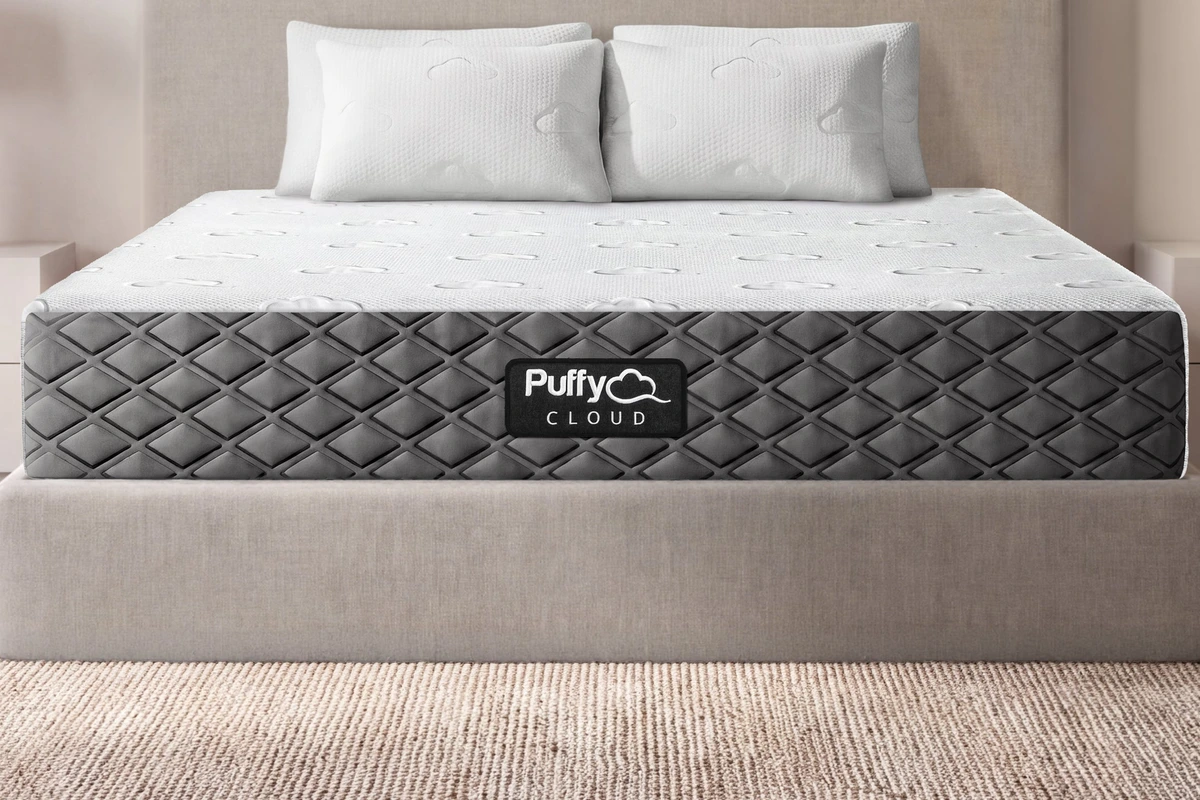
Puffy Cloud
61.6/100
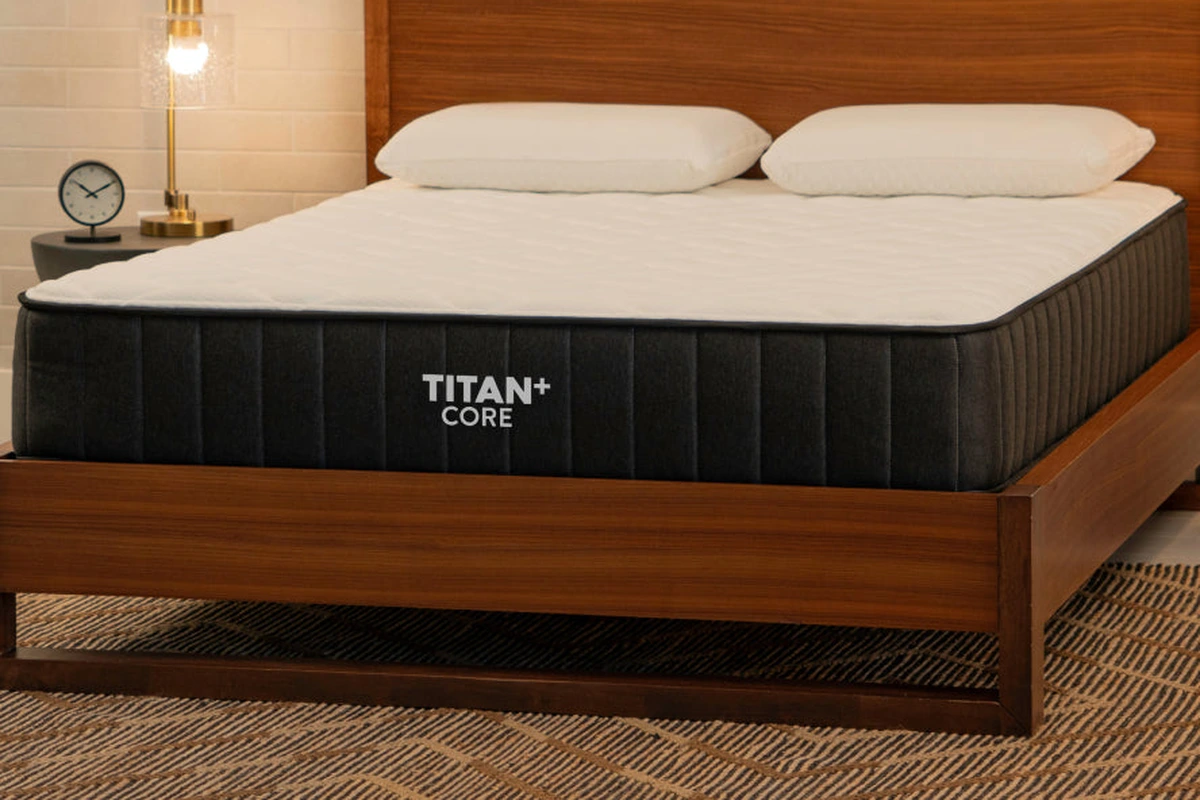
Titan Plus
87.6/100
Wins on pointsWho wins what
| Use case | Pick | Why |
|---|---|---|
| Best value | Titan Plus | 92 against 60. What the money buys, not what it costs. |
| Best for couples | Puffy Cloud | 88 against 76. Whether a partner's movement reaches your side. |
| Best support and feel | Titan Plus | 96 against 65. Spinal alignment once the hips and shoulders settle. |
| Best for hot sleepers | Titan Plus | 84 against 50. Whether the bed banks your body heat or releases it. |
| Best trial and service | Puffy Cloud | Puffy Cloud: 365 nights to decide against 120. |
How the five categories compare
| Category | Puffy Cloud | Titan Plus | Gap |
|---|---|---|---|
| Support | 65 | 96 | 31 |
| Cooling | 50 | 84 | 34 |
| Motion isolation | 88 | 76 | 12 |
| Edge support widest gap | 45 | 90 | 45 |
| Value | 60 | 92 | 32 |
How the scoring works. All five categories count equally, at ×3 each, and the winner is whichever bed has the higher weighted total. The category marked widest gap is where these two differ most, at 45 points - it is the clearest explanation of the result, not the thing that produced it. Scores run 0 to 100 and come from our review scorecards.
Category by category, in detail
Cooling — Titan Plus
Titan Plus takes cooling at 84 against 50, a decisive gap of 34 points. Cooling governs how fast the surface sheds the heat you put into it, which puts this column in front of anyone who runs warm, sleeps under a thick duvet, or shares the bed.
That comes straight off the build. Titan Plus uses a woven top cover, a breathable knit, with an optional GlacioTex cool-to-the-touch upgrade for about $150, backed by gel memory foam comfort layer.
In practice, a 34-point gap here is a solid argument for Titan Plus on this page, and it is most of what you are paying the extra $283 for.
Support — Titan Plus
Here Titan Plus leads 96 to 65, decisive at 31 points. Because support governs how well the bed holds your middle up instead of letting it settle, the gap lands hardest on back and stomach sleepers, heavier sleepers, and anyone with lower-back trouble.
You can see why in the layers. Titan Plus uses a Heavy-duty TitanCore coil support, reinforced individually encased steel coils, stronger than standard springs, engineered to distribute high weight and resist sagging, backed by TitanFlex transition foam and reinforced foam base.
In practice, a 31-point gap here is a solid argument for Titan Plus on this page, and it is most of what you are paying the extra $283 for.
Motion isolation — Puffy Cloud
Motion isolation goes to Puffy Cloud, 88 against 76 - a clear 12-point gap. What it decides is how far a movement travels before the bed absorbs it, and the people it decides it for are light sleepers sharing a bed, and anyone whose partner keeps different hours.
Puffy Cloud earns that on test, not on a published feature, because its construction detail for motion isolation is not broken out in the specification.
In practice, a 12-point gap here is a solid argument for Puffy Cloud on this page, and it arrives with the lower price attached, not a premium.
Edge support — Titan Plus, the widest gap between them
Edge support goes to Titan Plus, 90 against 45 - a decisive 45-point gap. What it decides is whether the sides hold firm or roll away under you, and the people it decides it for are couples short on width, and anyone who perches on the edge.
That is a construction difference. Titan Plus uses a reinforced foam base, backed by Heavy-duty TitanCore coil support.
In practice, a 45-point gap here is the strongest single argument for Titan Plus on this page, and it is most of what you are paying the extra $283 for.
Value — Titan Plus
Value goes to Titan Plus, 92 against 60 - a decisive 32-point gap. What it decides is what you are getting back for the money, and the people it decides it for are shoppers weighing two beds at very different prices.
That tracks the price directly: $1,049 for a queen Puffy Cloud against $1,332 for Titan Plus, 27% more. Value scores what you get back per dollar, not how good the bed is outright, so a cheaper bed can win this column and still lose the matchup.
In practice, a 32-point gap here is a solid argument for Titan Plus on this page, and it is most of what you are paying the extra $283 for.
Construction and materials
Puffy Cloud is a 10-inch, six-layer all-foam build. Puffy describes it as plush on top for pressure relief over a firmer core for alignment, with heat-dispersing gel foam and a cooling knit cover. The brand does not publish a layer-by-layer breakdown, so the stack below covers Titan Plus only.
Titan Plus is a heavy-duty pocketed-coil hybrid at 11 inches, built from 5 layers.
A memory foam bed and a hybrid do not fail in the same places: with Puffy Cloud, every layer is foam, so movement dies where it starts, but there is no coil unit to move air or stiffen the perimeter. With Titan Plus, foam sits on top of a coil core, so it splits the difference - contour at the surface, airflow and edge strength underneath.
Specifications
| Puffy Cloud | Titan Plus | |
|---|---|---|
| Queen price | $1,049 | $1,332 |
| Type | Memory foam | Hybrid |
| Height | 10″ | 11″ |
| Firmness | 5/10 | 8/10 |
| Firmness options | 1 | 1 |
| Twin price | Not published | $799 |
| King price | Not published | $1,665 |
| Fiberglass-free | Not published | Not published |
| Weight capacity | Not published | Engineered for heavier sleepers; Luxe rated ~1,000 lb total |
| Certifications | CertiPUR-US, GREENGUARD Gold | |
| Trial | 365 nights (free shipping and returns) | 120 nights |
| Warranty | Lifetime | 10 years limited |
Firmness and feel, by sleeper
Puffy Cloud is published at 5.0 out of 10 and Titan Plus at 8.0. That is 3.0 of a point apart, enough that most people would pick Puffy Cloud out as the softer of the two on first contact.
Side sleepers: Puffy Cloud fits light, average and heavy builds at 5.0 out of 10. Titan Plus at 8.0 sits outside the usual window for this position, so it is the harder recommendation here regardless of how it scores elsewhere.
Back sleepers: both land in the usual window, Puffy Cloud for light and average builds and Titan Plus for heavy. Support is what separates them here, 96 against 65 to Titan Plus, and back sleepers feel that column more than any other.
Stomach sleepers: Titan Plus fits average and heavy builds at 8.0 out of 10. Puffy Cloud at 5.0 sits outside the usual window for this position, so it is the harder recommendation here regardless of how it scores elsewhere.
Titan Plus publishes a weight capacity of Engineered for heavier sleepers; Luxe rated ~1,000 lb total. Puffy Cloud does not publish a figure.
| Position | Body weight | Usual window | Puffy Cloud (5.0) | Titan Plus (8.0) |
|---|---|---|---|---|
| Side | Light | 3.0-5.5 | In range | Too firm |
| Side | Average | 4.0-6.5 | In range | Too firm |
| Side | Heavy | 5.0-7.0 | In range | Too firm |
| Back | Light | 4.5-6.5 | In range | Too firm |
| Back | Average | 5.0-7.0 | In range | Too firm |
| Back | Heavy | 6.0-8.0 | Too soft | In range |
| Stomach | Light | 5.5-7.5 | Too soft | Too firm |
| Stomach | Average | 6.0-8.0 | Too soft | In range |
| Stomach | Heavy | 6.5-9.0 | Too soft | In range |
Each window is the firmness range that position and weight normally calls for, read off the published rating rather than measured on these beds.
Price and value
A queen Titan Plus is $1,332 against $1,049 for Puffy Cloud: $283 more, 27% more.
What the extra $283 buys, measured and not claimed: cooling, support and edge support - cooling 84 against 50, support 96 against 65, edge support 90 against 45. Everything else it does no better than the cheaper bed.
Spread across the warranty, Titan Plus works out at about $133 a year over 10 years and Puffy Cloud at $42 over 25. Even annualised the dearer bed stays dearer.
A twin price is not published for Puffy Cloud, so that size cannot be compared here.
A king price is not published for Puffy Cloud, so that size cannot be compared here.
Trial, warranty and delivery
| Puffy Cloud | Titan Plus | |
|---|---|---|
| Trial | 365 nights (free shipping and returns) | 120 nights |
| Warranty | Lifetime | 10 years limited |
| Delivery | Free shipping and returns | Not published |
| Return fee | No fee | Not published |
Puffy Cloud gives you 365 nights to decide against 120 for Titan Plus - 245 more nights. That matters more than it sounds: a mattress takes a few weeks to break in, so a 120-night trial is really about 90 nights of informed sleeping once the break-in period is deducted.
Both arrive compressed in a box, so unboxing is a wash.
A return fee is not published for Titan Plus, so confirm it before you buy.
On warranty, Puffy Cloud is the longer cover. Warranties protect against sagging and manufacturing defects rather than against the bed simply not suiting you, which is what the trial is for.
Where each one wins and loses
Puffy Cloud
- Motion isolation, 88 against 76. A 12-point lead on a 100-point scale.
- Cheaper by $283 on a queen. $1,049 against $1,332, 21% less for the same size.
- A 365-night trial. 245 more nights than the 120 you get with Titan Plus.
- Cooling, 50 against 84. Titan Plus leads by 34 points here, which is the gap you would be accepting.
- Support, 65 against 96. Titan Plus leads by 31 points here, which is the gap you would be accepting.
- Edge support, 45 against 90. Titan Plus leads by 45 points here, which is the gap you would be accepting.
- Value, 60 against 92. Titan Plus leads by 32 points here, which is the gap you would be accepting.
Titan Plus
- Cooling, 84 against 50. The woven top cover is the reason: a breathable knit, with an optional GlacioTex cool-to-the-touch upgrade for about $150.
- Support, 96 against 65. The Heavy-duty TitanCore coil support is the reason: reinforced individually encased steel coils, stronger than standard springs, engineered to distribute high weight and resist sagging.
- Edge support, 90 against 45. The reinforced foam base is the reason: a dense foundation that adds stability and durability under the coils.
- Value, 92 against 60. A 32-point lead on a 100-point scale.
- Also certified CertiPUR-US and GREENGUARD Gold. Certification the other bed does not publish.
- Motion isolation, 76 against 88. Puffy Cloud leads by 12 points here, which is the gap you would be accepting.
- Dearer by $283 on a queen. $1,332 against $1,049, which the scorecard has to justify.
- Only 120 nights to decide. 245 fewer than Puffy Cloud.
Who should pick which
Buy Titan Plus if edge support is the thing you are actually shopping for. It leads 90 to 45 there, the widest gap between these two beds, and it wins the card overall by 26 points on equal weighting.
Buy Puffy Cloud if you care more about motion isolation, because it still beats the winner there: motion isolation 88 against 76. Losing the weighted total does not mean losing every column, and if your priority is one of those, the ranking on this page is answering a different question from yours.
It also leaves $283 in your pocket, which is a real part of the decision and not a consolation.
Check current pricing
FAQ
Which is better overall, the Titan Plus or the Puffy Cloud?
Titan Plus wins on points by 26 points, scoring every category at equal weight. The clearest difference between them is edge support, where it scores 90 against 45 - the widest gap on the card, and the best short explanation of the result rather than the thing that produced it.
A points win is not the same as a better bed for you. If your priority happens to be a category Puffy Cloud leads, the honest answer flips, which is why the full scorecard is published above and not just the verdict.
Is the Titan Plus worth $283 more than the Puffy Cloud?
A queen Titan Plus is $1,332 against $1,049, 27% more. It earns some of that back: it leads on cooling, support and edge support. Puffy Cloud scores 60 on value against 92, and that column exists precisely to answer this question.
Which is firmer, the Titan Plus or the Puffy Cloud?
Titan Plus is published at 8.0 out of 10, Puffy Cloud at 5.0. That is a gap of 3.0 points, which most people would notice on first contact, without having to sleep on it. Both ship in a single firmness, so what you read is what arrives.
Which has the better trial and return policy?
Titan Plus gives 120 nights, Puffy Cloud gives 365. That is 245 nights of difference, and since a mattress needs a few weeks to break in, the shorter trial leaves roughly 90 nights of genuinely informed sleeping. Puffy Cloud charges no return fee, and Titan Plus does not publish one, so confirm it before buying.
Does the edge support difference actually matter day to day?
It is a 45-point gap on a 100-point scale, 90 against 45, the widest on the card. Edge support governs whether the sides hold firm or roll away under you, and the people who feel it are couples short on width, and anyone who perches on the edge. If none of that describes you, this is the wrong page to decide on: the two beds are closer everywhere else, and you should weight whichever column does describe you.
Every category is published with its own score for exactly that reason, and all five count equally towards the total.
Scores come from our own review scorecards and the weighting is published above. Construction, pricing and policy details are read from our full reviews of each mattress. Where a brand does not publish a figure we say so rather than estimating it. We earn a commission on purchases made through links on this page. It does not affect the result, which is computed from the scores.